
Creatine Benefits Explained Simply
Let me tell you how I actually got interested in creatine, not because a coach told me to, and not because I read some study first.
It happened at the gym.
I’d been training consistently for a while, nothing crazy, just showing up and doing the work. Then one day, a guy I didn’t even know came up to me between sets and said, “Hey, you lift really rhythmically…like, every rep looks the same, same speed, same control.”
I remember laughing because at that point I actually wasn’t taking it yet. But that comment stuck with me. He wasn’t talking about how much weight I was lifting, he was talking about how consistent each rep looked, set after set, without that usual drop-off in power by the third or fourth set. That’s when I started actually reading into what creatine does, and a few weeks after I started taking it myself, I understood exactly what he meant. My last sets stopped feeling like a weaker, shakier version of my first sets.
That’s really what creatine is about. It’s not a magic muscle-building powder, and it’s not going to turn you into someone else overnight. What it does is help your muscles keep producing energy for those extra hard reps, so your performance stays more consistent throughout your entire workout, not just the first ten minutes of it.
If you’ve heard people talk about creatine as either the “most overhyped supplement” or the “closest thing to a legal magic pill,” neither one is true. It’s just backed by an enormous amount of research, and once you understand how it works, it stops feeling like a mystery.
What Is Creatine, Really?
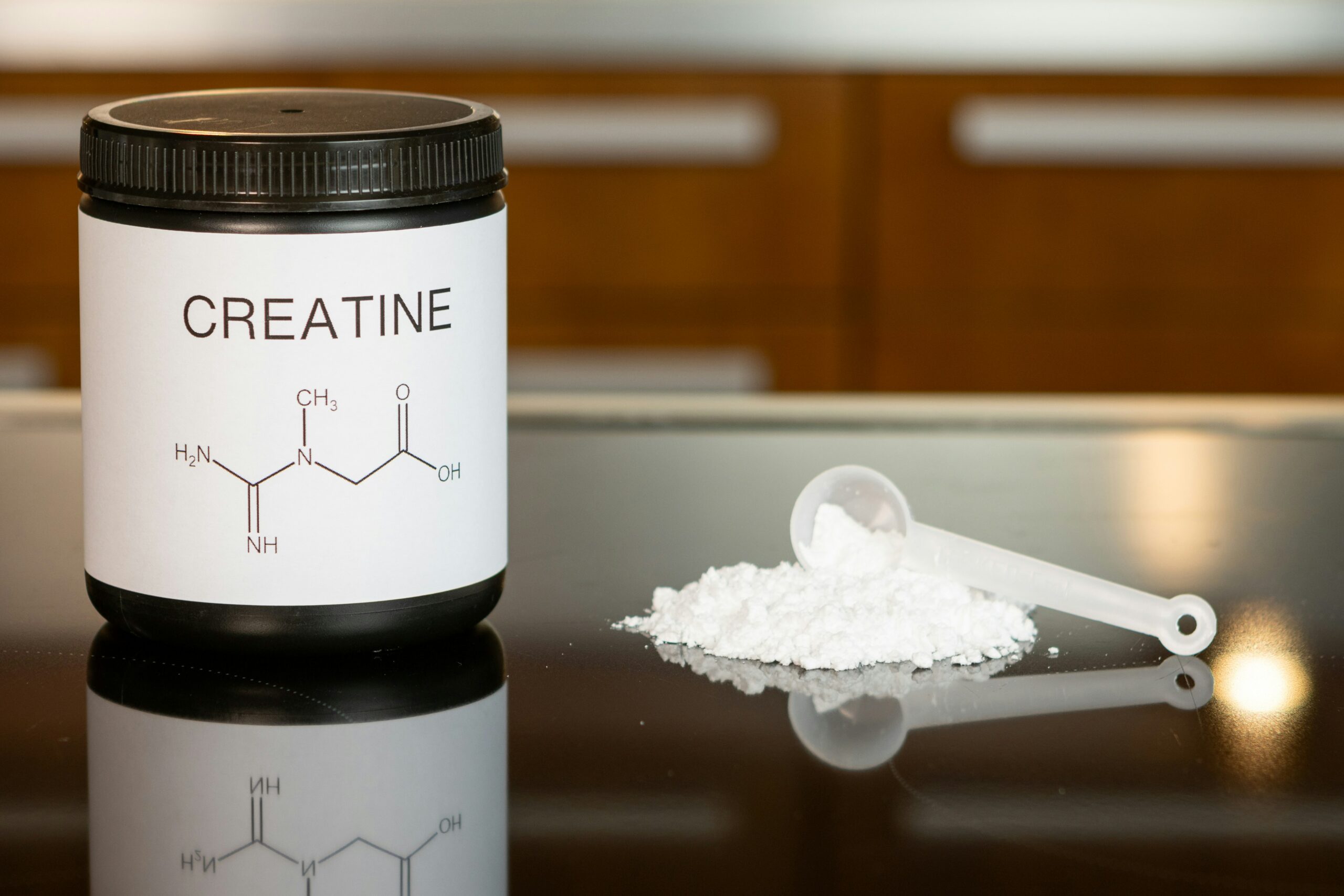
Creatine is a natural compound that’s already inside your body, mostly stored in your muscles, with your body producing a small amount on its own from amino acids. You also get small amounts of it from foods like red meat and fish.
The problem is that the amount your body naturally produces and gets from food is usually far below what could actually be useful for performance. That’s where supplementing with creatine monohydrate comes in, it simply tops up your muscle stores to a level where they can function more efficiently during intense effort.
It’s one of the most heavily studied supplements that exists, with decades of research behind it, covering everything from athletic performance to brain health. That’s a big part of why it’s so trusted, in a supplement industry where a lot of products make claims that don’t hold up.
How Creatine Actually Works (Explained Simply)
Here’s the simple version, without turning this into a biochemistry lecture.
Your muscles use a molecule called ATP for quick energy, think of it as the fuel your muscle cells burn instantly during a heavy lift or a sprint. The problem is, your body only stores a tiny amount of ATP, enough for about 8–10 seconds of maximum effort.
Creatine helps regenerate ATP faster by donating a phosphate group through something called the phosphocreatine system. In plain terms: more stored creatine means your muscles can restock that fast-energy fuel more quickly between hard efforts.
This is exactly why creatine doesn’t help much with long, steady-state cardio, but it makes a noticeable difference in anything short, intense, and repeated, heavy lifting, sprinting, jumping, or any stop-start type of training.
The Real Benefits of Creatine
Let’s go through what creatine actually does, based on what the research consistently shows.
1. More Strength and Power Output
This is the benefit most people already associate with creatine, and it’s well-earned. By improving your muscles’ ability to regenerate energy quickly, creatine allows you to push out those extra one or two reps that you’d normally miss, especially toward the end of a set.
2. Better Training Consistency
This connects directly to that gym story. When your muscles can recover their energy stores faster between sets, your performance doesn’t drop off as sharply set after set. Your third set starts looking a lot more like your first one.
3. Increased Muscle Mass Over Time
Part of this is due to creatine pulling water into your muscle cells (more on that myth below), but a meaningful part is also due to the fact that you’re simply able to train harder and more consistently, which over weeks and months translates into more muscle growth.
4. Faster Recovery Between Sessions
Some research suggests creatine may help reduce muscle cell damage and inflammation following intense exercise, which can support quicker recovery between training sessions.
5. Cognitive and Brain Health Support
This is the benefit most people don’t expect. Since your brain also uses ATP for energy, some studies suggest creatine supplementation may support mental fatigue resistance, memory, and cognitive performance, particularly during sleep deprivation or mental stress.
6. Useful Beyond the Gym
Creatine has also been studied for its potential role in supporting healthy aging, bone density, and even certain aspects of metabolic health, making it relevant even for people who aren’t necessarily chasing performance goals.
Common Myths About Creatine
This myth refuses to die, but for healthy individuals without pre-existing kidney conditions, decades of research have not shown creatine monohydrate to cause kidney damage at standard doses. If you have an existing kidney condition, it’s always smart to check with a doctor first, but for the average healthy person, this isn’t a real concern.
Partially true, partially misunderstood. Creatine does pull water into your muscle cells, but this is intracellular water meaning it sits inside the muscle, not underneath your skin causing a puffy, bloated look. This water retention can actually support muscle function and appearance over time.
Not necessarily. A loading phase (taking a higher dose for about a week) does saturate your muscles faster, but a consistent daily dose without loading gets you to the same saturation point, it just takes a couple of weeks longer. Neither method is “better,” it just depends on how patient you are.
How Much Creatine Should You Take?
For most people, the standard, well-researched dose is:
3–5 grams per day, taken consistently, every day (including rest days).
That’s genuinely it. You don’t need to cycle it, and you don’t need to take it at a specific time of day for it to work, total daily consistency matters far more than exact timing.
| Approach | Dosage | Time to Full Saturation | Best For |
|---|---|---|---|
| Loading Phase | 20g/day (4 doses) for 5–7 days, then 3–5g/day | Faster (~1 week) | Those who want quicker results |
| No Loading | 3–5g/day from day one | Slower (~3–4 weeks) | Beginners, simpler routine |
Both approaches lead to the same place, fully saturated muscle creatine stores, so pick whichever fits your patience level and budget better.
Beginners vs Advanced Lifters: Does It Matter?
If you’re a beginner
Creatine is genuinely one of the simplest, most beginner-friendly supplements you can add to your routine. There’s no complicated protocol, no need to time it around your workout, and the benefits more consistent energy across your sets will likely be noticeable within the first few weeks.
If you’re more advanced
You’ve probably already built a solid base of strength and consistency, so creatine’s role shifts slightly, it becomes more about squeezing out that extra rep, supporting recovery between intense training blocks, and maintaining performance during periods of higher training volume.
Either way, the supplement itself doesn’t change, what changes is how much of a noticeable difference it makes, since advanced lifters are usually already closer to their natural performance ceiling.
Which Type of Creatine Should You Buy?
Walk into any supplement store and you’ll see multiple types: monohydrate, HCL, buffered, ethyl ester, and more. Here’s the honest breakdown.
| Type | Research Backing | Price | Verdict |
|---|---|---|---|
| Creatine Monohydrate | Extremely strong, decades of studies | $ Affordable | The gold standard — buy this |
| Creatine HCL | Limited, claims of “better solubility” | $$ More expensive | No proven advantage over monohydrate |
| Buffered Creatine (Kre-Alkalyn) | Weak, no clear benefit shown | $$ More expensive | Marketing over substance |
| Micronized Creatine | Same as monohydrate, finer particles | $ Slightly more | Mixes more easily, same benefits |
Bottom line: creatine monohydrate remains the most researched, most affordable, and most effective option on the market. Unless you have a specific reason to try an alternative, there’s no need to overcomplicate this choice.
Our Top Creatine Recommendations
Based on purity, price per serving, and brand reliability, here are the options worth considering.
🏆 MOST TRUSTED
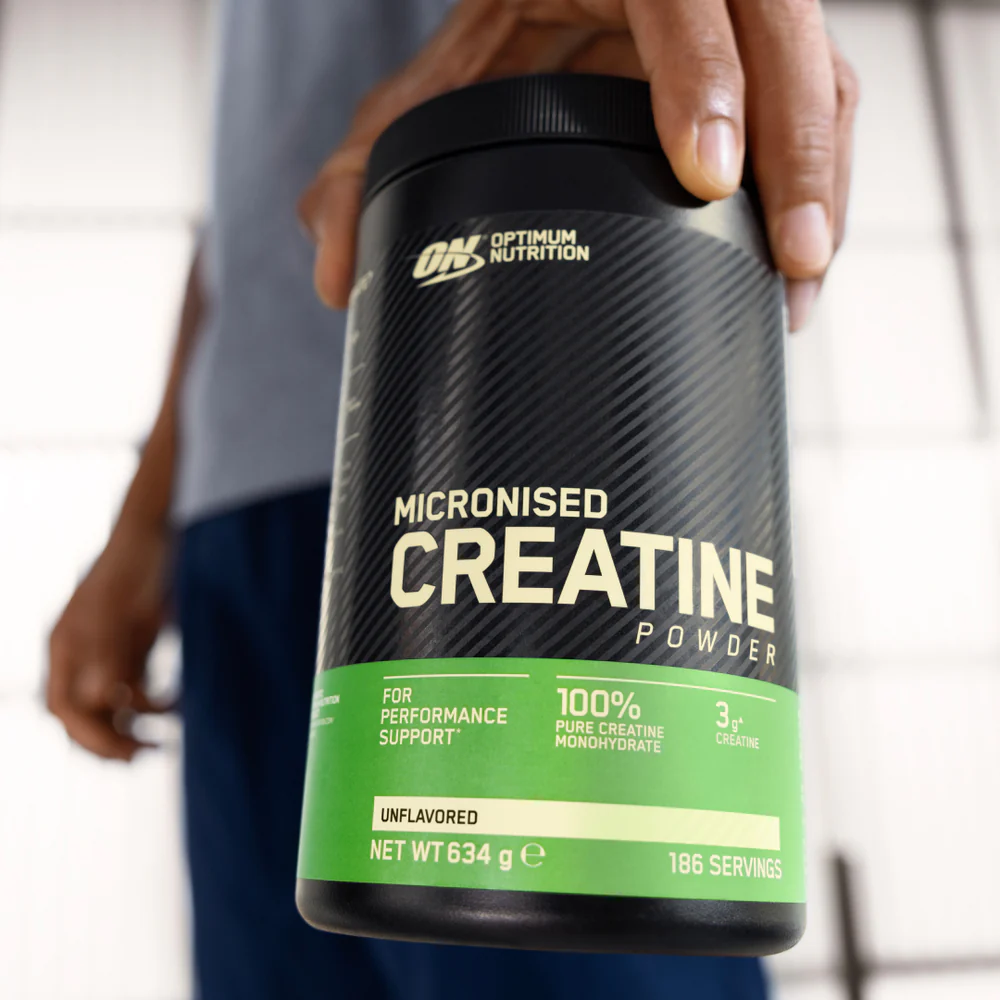
Micronised Creatine Powder
- 3g of creatine monohydrate per serving
- Micronized for easy mixing, virtually no grit
- Made by the world’s #1 sports nutrition brand
- Available in flavoured and unflavoured options
💰 BEST VALUE
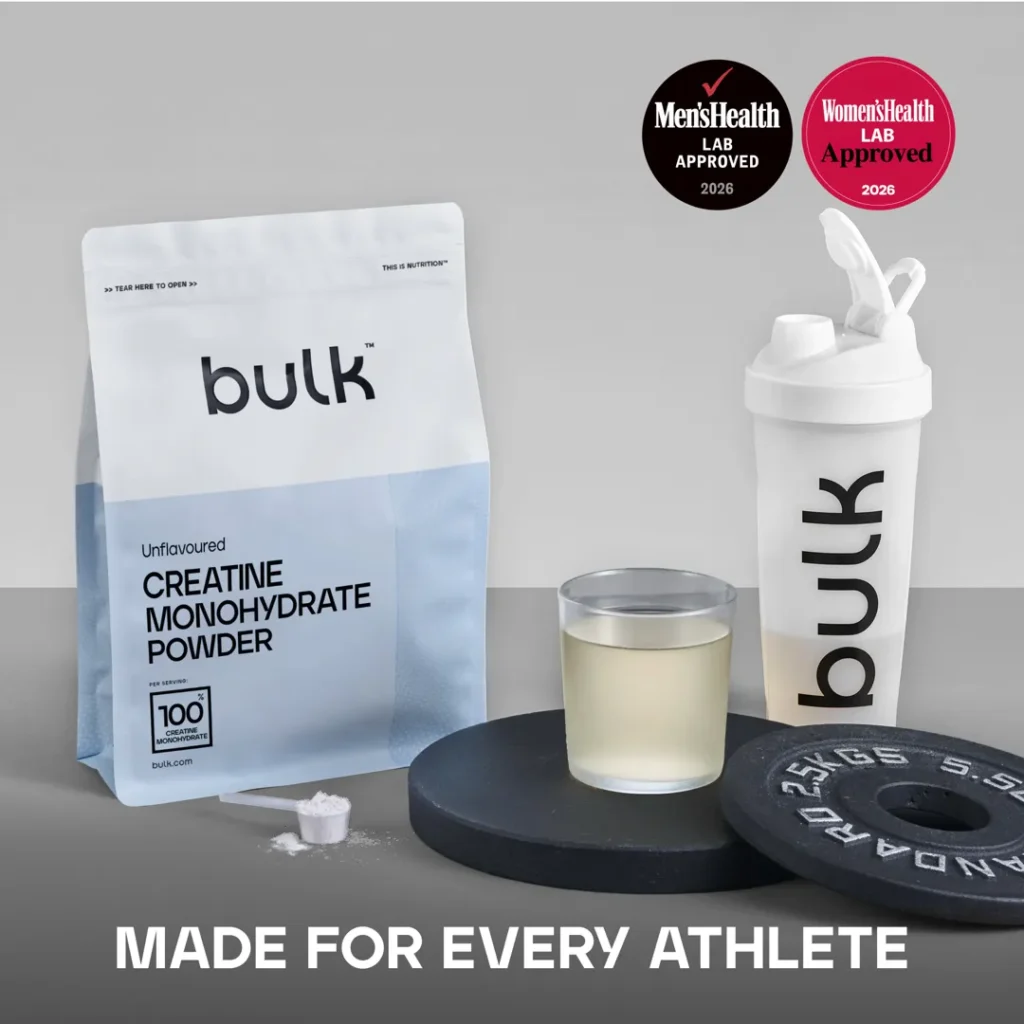
Bulk Creatine Monohydrate
- 100% pure creatine monohydrate
- No fillers, no unnecessary additives
- Excellent cost-per-serving for daily use
- Unflavored and flavored options available
⚡ GREAT ALL-ROUNDER
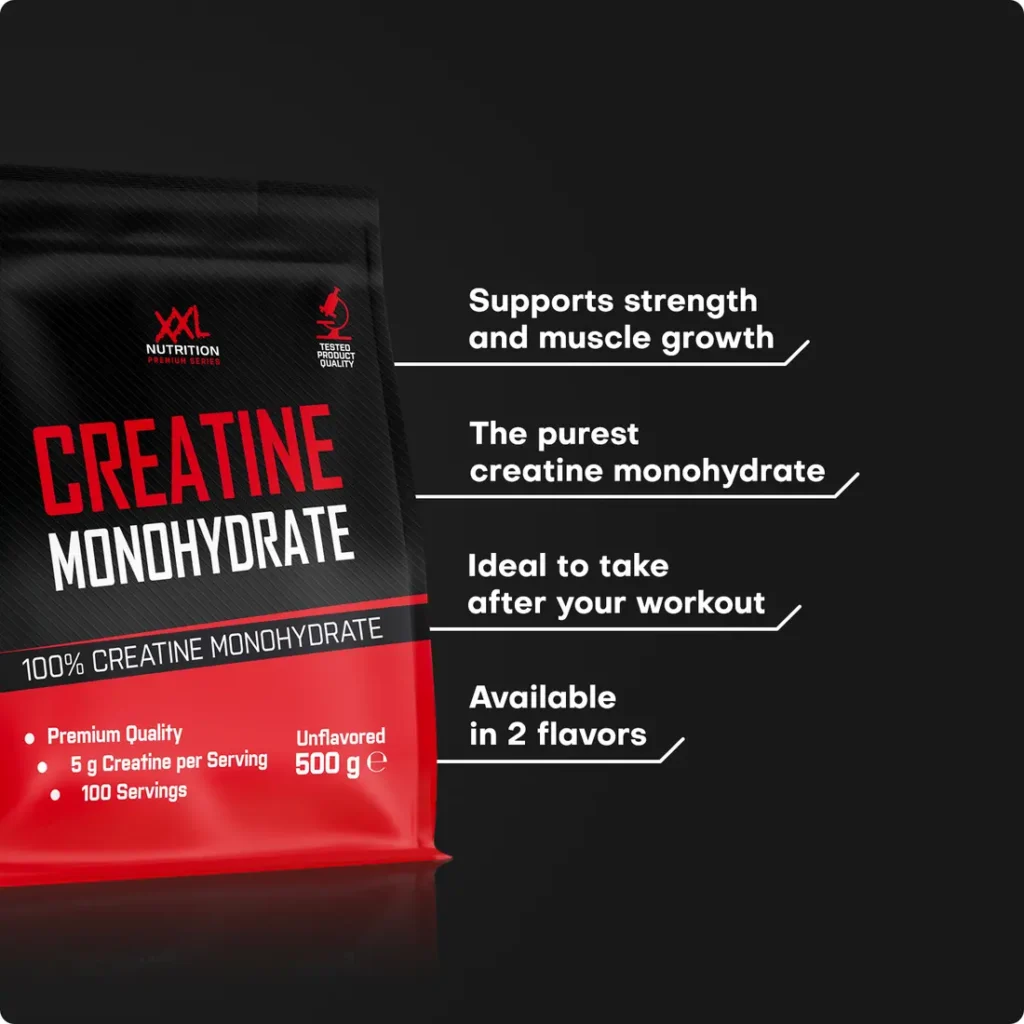
XXL Nutrition Creatine Monohydrate
- 100% pure, microfine creatine monohydrate
- Vegan and calorie-free
- Dissolves easily in water, juice, or a shake
- Competitive pricing compared to bigger international brands
📦 BUDGET / AMAZON PICK
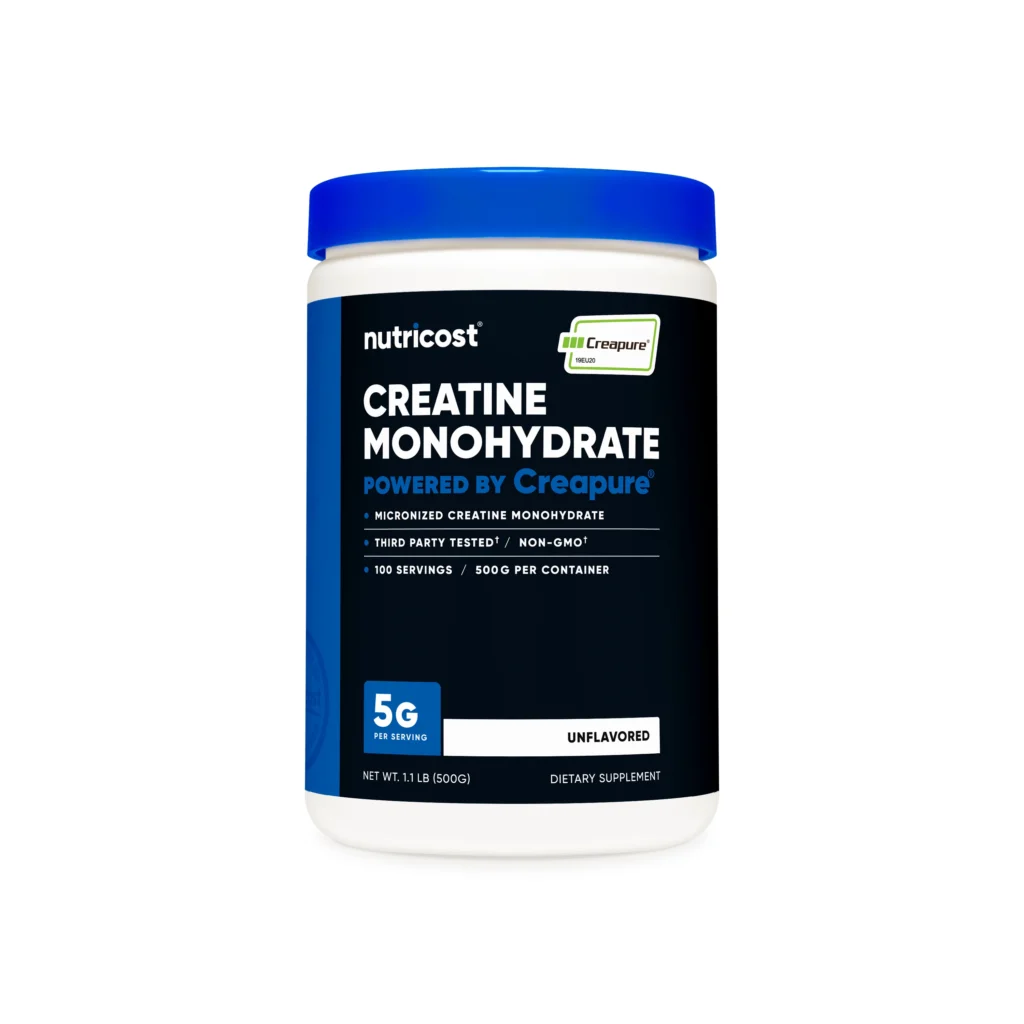
Nutricost Creapure® Creatine Monohydrate
- Made with certified Creapure® — German-manufactured, pharmaceutical-grade purity
- 5g of pure creatine monohydrate per serving, unflavored
- No fillers, no unnecessary additives
- Great value per serving with fast Amazon Prime shipping
If you’re also working on dialing in your protein intake alongside your creatine routine, it’s worth reading our Best Protein Powder: Complete Buying Guide to make sure the rest of your supplement stack is just as solid.
Frequently Asked Questions About Creatine
Does creatine cause hair loss?
There is no strong scientific evidence directly linking creatine monohydrate to hair loss in the general population. The concern originally stemmed from a single small study showing a hormonal change, but no direct causal link to hair loss has been consistently established since.
Can women take creatine?
Yes. Creatine works the same way in the body regardless of gender, and women can benefit from the same improvements in strength, training consistency, and recovery.
Do I need to cycle off creatine?
No. Long-term daily use has been studied extensively and shown to be safe for healthy individuals. Cycling on and off isn’t necessary for it to keep working.
Will creatine make me bloated or puffy?
Any water retention from creatine happens inside your muscle cells, not under your skin, so it typically doesn’t cause a bloated appearance the way excess sodium or carbs might.
Can beginners take creatine right away?
Absolutely. There’s no need to “earn” the right to use creatine through months of training first it’s beginner-friendly from day one.
Final Thoughts
Creatine isn’t flashy, and it doesn’t come with a dramatic before-and-after story. What it actually gives you is quiet, consistent improvement the kind that a training partner might notice in your form and rhythm before you even notice it yourself, exactly like what happened to me at the gym that day.
If you’re looking for one supplement to start with that has decades of solid research behind it, an excellent safety profile, and a genuinely noticeable impact on your training consistency, creatine monohydrate is about as close to a safe bet as this industry gets.
Take 3–5g of creatine monohydrate daily, stay consistent, and pair it with a solid protein intake and a structured training routine — the results build quietly over weeks, not overnight.
Continue Learning
If you want to keep building out your supplement knowledge, these guides pair naturally with this one:
*Best Protein Powder: Complete Buying Guide
*Whey vs Isolate: The Truth You Need
*Common Protein Mistakes That Slow Down Progress
This article contains affiliate links. If you purchase through our links, we may earn a small commission at no extra cost to you.